

Our Procedures

Watch Our Procedures
All-on-4
What is All-on-4?
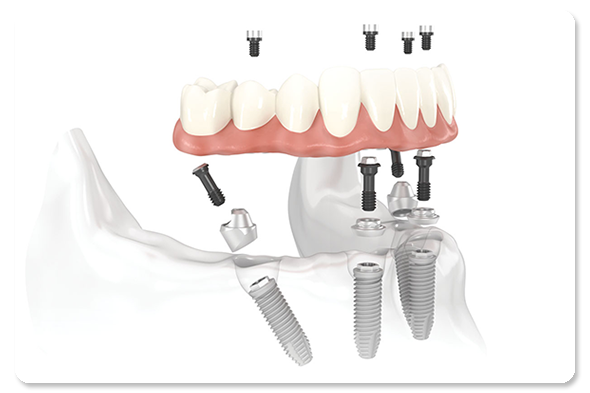
All-on-4 is a fixed implant supported bridge that involves a minimum of four implants. They are more durable than your conventional dentures and provide you with natural-looking teeth that is secured to the anchors (dental implants). Many patients who have totally missing teeth are not aware of this modern implant solutions and are unhappy denture wearers. Most cases are not patients with all missing teeth, but patients who have severe gum disease and are frustrated with continuously failing dental work that are seeking a long term solution. A solution that will allow the patients to live life with confidence and have permanent artificial teeth that are almost as close as having natural teeth.
All-on-4 Benefits:
- Non-removable arch of teeth, instead of removable one.
- You will never have to remove on a daily basis.
- No thick plastic extended into the cheek or on the roof of the mouth areas, so you have a comfortable and custom fit. Much of the bulk of the denture material is eliminated.
- Increases chewing function and eating foods you love, raw nuts/veggies. Improved diet and which is proven for better overall health.
- Surgical portion of the procedure generally completed in one day. Most procedure avoids complex procedures, grafting and sinus lifts.
- Bone loss continues after toothless. Implants stimulate and maintain bone structure and support the cosmetic fullness of the face.
- Compared to conventional dentures, this treatment option dramatically improves the quality of life.
What to expect:
The All-on-4 procedure is typically completed in just one day and can be done under local anesthesia with or without light sedation. The procedure will consists of 4 to 6 implants that are placed into the jaw, and immediate temporary teeth attached. You leave that day with non-removable teeth. Discomfort is usually minor and the doctor will prescribe you a pain medication just in case. These beautiful temporary teeth will eventually be replaced with permanent ones in about 3-5 months. During this temporary and healing phase a soft diet is required and once the permanent set is completed you can enjoy a very normal and healthy diet.
Is All-on-4 right for you?
Every patient is different and results vary. With so many treatment options, we will explain the benefits that best fits your dental needs. Please contact us today for a complimentary consultation with a trained Specialist and General Dentist, and together we can choose the best treatment plan for you.
Dental Implants
The dental implant is simply a replacement for lost dental roots. They are surgically placed artificial tooth roots used to support some form of dental restoration that replaces a missing tooth or teeth. The dental implant is an anchor that permanently supports a wide range of dental prosthetics (artificial replacement tooth or teeth).
A single dental implant can replace one tooth but multiple implants are needed to replace many missing teeth. Once the implant is placed then additional parts are connected to the implant called “abutments”. The abutments vary greatly depending on the final outcome. The final tooth or dental prosthesis is then placed over the abutment.
The final product is usually permanently cemented to the abutment, but in some scenarios might be removable. The majority of patients that have lost a tooth or teeth might feel too self-conscious to smile or talk and they might suffer from biting irregularities that can have dramatic changes in their eating habits, leading to secondary health problems like malnutrition or digestive problems. By replacing missing tooth roots with dental implants, we can provide people with tooth loss solutions that build a solid foundation to chew normally.
to the top
Dental Bone Grafting
When bone around teeth becomes damaged or after a tooth removal, bone grafting is often necessary to repair the patient’s jaw to which will improve adjacent teeth support or is necessary for preparation for dental implant(s). A patient’s need for bone grafting will be identified at the exam and at the time of their pre-surgery x-rays. There are many types of materials and procedures that fall under this heading and every case has its own specific requirements.
There are four types of bone grafts; autograft (taken from the patient), allograft (human donor), xenograft (animal donor) or synthetic (non-biologic). The bone grafting procedure can range from very small repairs on a single tooth site, to complete volume repair of an entire jaw. The surgeon will explain the types and procedures to you at your consultation. The grafting procedure can sound intimidating, but to avoid this necessary step in treatment will often times require more involved steps in the future to achieve the same goals. This is very necessary step in achieving a healthy and stable smile. Depending on the patient, the location and the size of the graft, the maturation time varies greatly.
Your surgeon will advise you of your specific healing times. After initial healing the graft will then take anywhere from 2 to 6 months to fuse and integrate with your existing bone. Your doctor will monitor your healing and keep you updated as to when the stability has been achieved and the rest of the treatment steps can begin.
Ridge Augmentation:
this is a term used to describe a type of bone graft that require more technical surgical procedures to repair very damaged or atrophied bony ridges of the jaw requiring dental implants. This uses many materials and requires detailed follow up and instructions. If this is needed a consultation will explain the process.
Sinus Grafting or Elevation:
is a term used to describe a type of bone graft done in conjunction with dental implants in the upper back part of the jaw. The sinus is an air space connected to the nasal passages, which is located above the bony ridge in the back part of the upper jaw. Due to tooth loss and disease the amount of bone in this area can shrink dramatically, thus requiring the surgeon to delicately add bone to the bony ridge that is adjacent to the floor of the sinus space. The sinus cavity is never entered in this procedure. The graft is tucked under the floor of the sinus with special surgical techniques that elevate it. This is ultimately done so that implants can be placed with good support.
to the top
Socket Bone Graft (Site Preservation)
The socket is the void in the jaw bone that is left when a tooth root is extracted. This site is often times damaged from infection, trauma or periodontal disease. This damage in the jaw bone is repaired with a socket bone graft. If left to heal on its own the final bony ridge will have lost significant bone volume and this can esthetically and functionally compromise tooth replacement and the health of adjacent teeth. This procedure is often used in preparation for bridges or dental implants.
The tooth and root is removed and remaining infection and damaged tissue will be removed to leave a clean empty socket. A specific material is chosen and securely placed into that socket to reconstruct the ridge for future use. A temporary will be immediately placed in cosmetic areas so the patient will be comfortable and confident during healing. There will be an average healing time of 2 to 6 months so that the site can mature and replace the graft with natural bone. Once healing is complete then the definitive restorative (permanent tooth replacement) treatments can begin.
to the top
Gingival (Gum) Grafts
Gingival (gum) grafting is a relatively common procedure recommended and performed to dramatically improve the health of teeth and will many times improve the appearance of a smile. Gingival grafting is recommended when teeth have recession, sensitivity and abrasion. This condition often follows advanced cases of gingivitis and may ultimately lead to exposed roots and the deterioration of the bone surrounding the teeth. Bone is the true supportive tissue of the tooth roots and gums cover and protect the bone, so when you see exposed/receded roots it is actually visual bone loss on the teeth.
Depending on the scenario, the graft will be placed for functional repair of damaged and lost gum, or for coverage of the root to prevent cavities, sensitivity and for cosmetics. Many variations of gingival grafts exist and your surgeon will discuss and recommend specific types for you. In many gum grafting procedures the surgeon transplants some of the patient’s own tissue from area next to the recession or from the roof of the mouth. A very thin piece is removed and carefully placed onto the root or slightly below the recession. It is then carefully attached with very fine sutures and allowed to mature.
Gum grafting is a very successful, natural way to repair these problems. Remember that diagnosing these problems is crucial for tooth health and the sooner that the treatment is done the better the long term result.
to the top
Periodontal Surgery (Treatment For Gum Disease)
If you’re diagnosed with periodontal disease, your doctor may recommend periodontal surgery. Periodontal surgery is necessary when your periodontist determines that the tissue around your teeth is unhealthy and cannot be repaired with non-surgical treatment.
Many different types of gum surgery can be performed and your periodontist will determine the best technique for you. The primary goal of gum surgery is still to eliminate the bacterial plaque and tartar below the gums which is ultimately responsible to the progression of the disease.
Traditional respective surgery
is performed when deep pockets need to be receded and bony therapy (like smoothing or grafting) must be accomplished. This is usually in very advanced gum disease cases. The gums are delicately reduced and the bony edges of the teeth accessed for re-contouring to health. Bony grafts are placed into damaged voids around the teeth and growth factors applied to try to repair the support. The tissue is finally sutured tight around the tooth and bone to reduce the pockets and improve access for home care cleaning.
Guide tissue regeneration surgery
is performed when there are very isolated deep pockets that can be surgically cleaned and then grafted with hopes of returning the damaged or lost support to the tooth. This is usually done to avoid tooth loss. The areas are accessed surgically so that bone and tissue repair materials can be placed and tight closure is then achieved with hopes of regenerating the support. This will take up to 6-12 months to heal. This is done with very selective sites.
Laser assisted new attachment procedures (LANAP®)
are some of the newest therapies in gum disease treatment. This procedure is very technical and requires special certification to perform. Many lasers exist and attempt to be used to treat gum disease but only one is FDA approved for LANAP therapy. The specific wavelength of energy that is used to remove only diseased tissue and bacteria. This will leave only good gum tissue that is then reattached back to the tooth with hopes of proper regeneration of lost damaged support. This treatment is now becoming the best “first line of therapy “to treat many stages of gum disease. If areas do not respond to this treatment then other more invasive treatments are employed.
Gum disease is the primary cause of tooth loss. Tooth loss is simply the amputation of a functioning portion of your body and the basis of periodontal therapy (non-surgical and surgical) is to avoid this irreversible change.
Factors causing periodontitis (gum disease): genetics, smoking (tobacco use), poor dental care, poor oral hygiene, systemic diseases or conditions, medications, trauma, poor bite, malnutrition, and more.
Remember the disease has no cure but through good commitment to treatment and care the disease can be halted and managed very well. Sooner you seek care the more options exist and the more tooth retention we can achieve.
to the top
Aesthetic Crown Lengthening (Gummy Or Uneven Smile)
Gum surgical procedures are available to lay the groundwork for beautiful restorative and cosmetic dentistry by improving the esthetics of your gum line. Teeth can appear short or you might think you show too much gum. This scenario is not one to avoid and has many treatments to alter or fix your gums. Your doctor is trained in helping you with this so please inquire about your concerns of your own smile. Do not hesitate to explore this situation if think it pertains to you.
This procedure might be necessary after orthodontic treatment (braces) because as the teeth are moved into ideal position they can often time “bunch up” the gum tissue and make it un-esthetic and even unhealthy. Talk to us if you think it pertains to you. The re-shaping of the gums after braces often times is the ultimate step in your quest for a beautiful smile.
to the top
Functional Crown Lengthening
Teeth do fracture and decay, and many times this can occur under the gun line. This can even encroach on the bone around the tooth making it unhealthy and very difficult or impossible to fix the tooth. Your dentist will recommend a functional crown lengthening procedure for this situation. The surgeon will perform a localized surgical procedure that will adjust the gums and bone on the tooth in question and the adjacent teeth so ideal health can be maintained and the tooth can now be cleanly treated by your dentist.
Through the surgical procedure the gums are tightened around the bone and root to expose healthy structure so the dentist can cleanly repair the tooth. This will expose the decay or damage part of the tooth. The gums will need a minimum of 4 weeks to heal prior to the final repairs. The procedure is required to save the tooth.
In some circumstances the surgeon will recommend removing the tooth because the damage is too great and the repair to save it is too costly for a poor prognosis. If this is the case the surgeon will discuss implant or bridge alternatives and coordinate this with the dentist.
to the top
Occlusion Therapy / Adjustment (Bite Adjustments)
Many periodontal problems are strongly related to a poor occlusion (bite). In fact, occlusion is one of the most important factors in dentistry because the success or failure of practically everything related to the teeth depends upon its ability to operate within the boundaries of the patient’s ideal physiologic occlusion. Even a simple filling that changes the way a patient bites can cause untold agony for the patient.
Periodontal disease is directly related to the bite. The forces of the bite directly translate into the roots, periodontal ligament and bone. Poor biting forces cause the gum and bony infection of periodontal disease to speed up and become more aggressive. This is called traumatic occlusion and like all chronic diseases and issues of the body, pain won’t be perceived until it is too late.
Complete change of the bite is not the ultimate goal of occlusal adjustment in periodontal therapy. The emphasis is the ideal adjustment of the bite that is directed at balancing the contacts of teeth and movements so that the existing scenario works together to distribute the forces more evenly.
The procedure is often done in steps and done along with other treatments. The doctor simply has the patient go through jaw movements and records the trauma. After identifying the interferences they will use fine diamond polishing burs to re-contour the shape of some teeth to a more ideal bite. This is simple and often without dental anesthesia (numbing).
to the top